

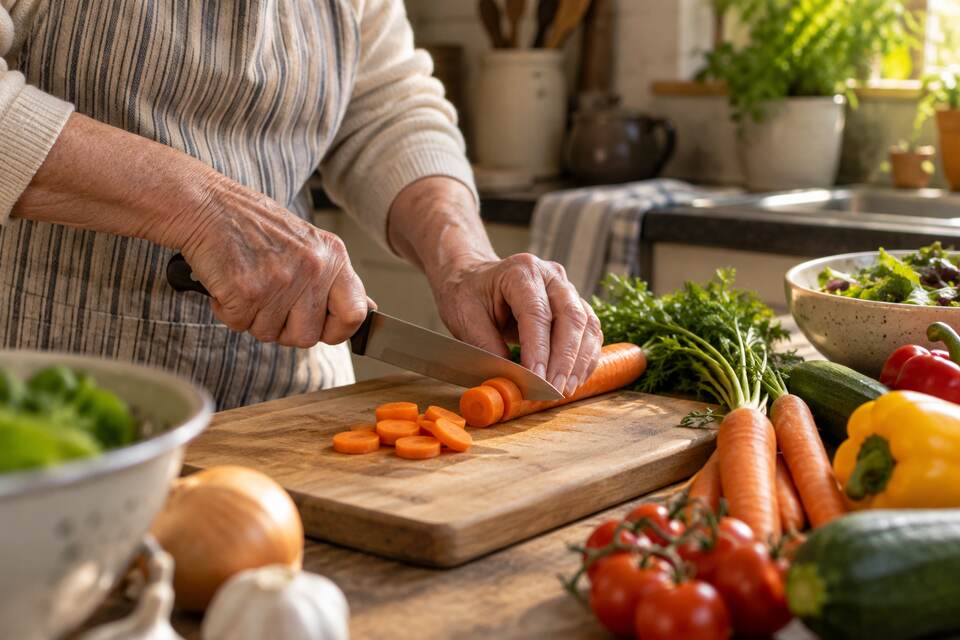
Exploring why older adults withdraw from cooking — and why it matters.
The Hidden Challenges Behind “I Don’t Cook Anymore”
Many older adults describe a moment they never expected: standing in their own kitchen, wanting to cook the meal they’ve made for decades, but finding their hands, back, or legs won’t cooperate. The chopping hurts. The stirring is tiring. The bending feels unsafe. And slowly, almost quietly, they begin to hand over the cooking to younger bodies.
For some, this feels practical. For others, it feels like losing a part of themselves.
Cooking isn’t just an activity of daily living. It is identity, contribution, memory, and pride. So when pain, fatigue, or fear of falling make cooking difficult, the withdrawal is not only physical — it is emotional.
Cooking Is More Than Physical
Research shows that hand osteoarthritis, reduced grip strength, knee pain, lumbar spine degeneration, and chronic fatigue significantly limit daily tasks like chopping, stirring, and standing — even when motivation remains strong.
Cooking is also cognitively demanding. A large Japanese study found that cooking at least once a week was associated with lower dementia risk, highlighting the planning, sequencing, and memory involved.
Sensory Memory and Identity
Neuroscience shows that smell-evoked memories are older, more vivid, and more emotionally positive. Garlic sizzling, pandan steaming, onions caramelising — these aromas anchor identity and belonging.
When older adults withdraw from cooking, they lose access to these sensory anchors.
[…] ← Previous: When Cooking Becomes Difficult Next: Returning to the Kitchen — Inside the Silver Wellbeing Workshop → […]