
The author returns with renewed excitement to demonstrate the model once more, after years of watching others substantiate the evidence first observed in Malaysia.
Silver Floss Before the Evidence
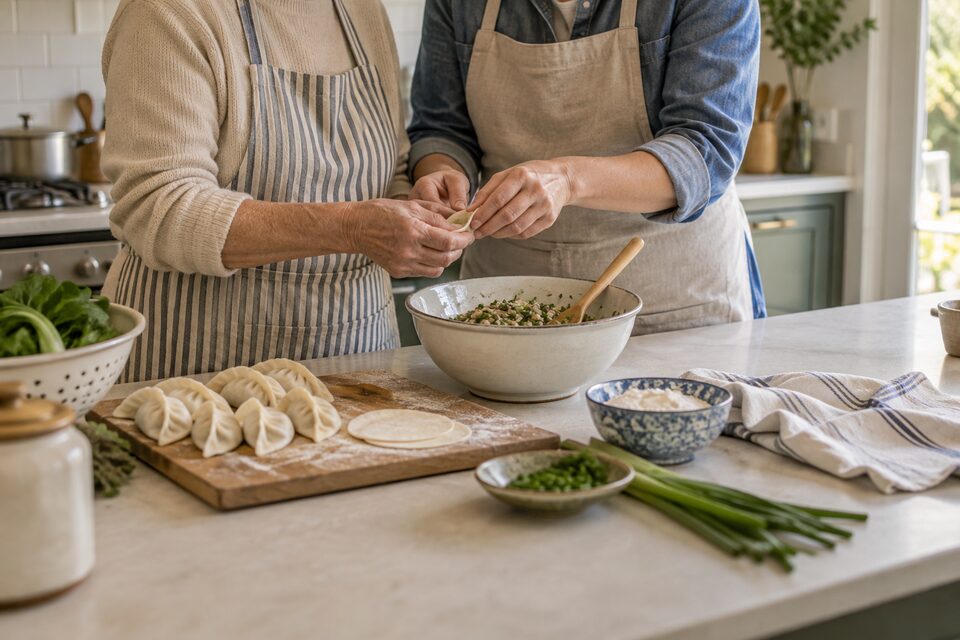
Long before cooking interventions appeared in journals, a small Malaysian kitchen offered an early glimpse into something important. In 2017, a simple idea called Silver Floss was trialled — a dyadic cooking model where an older adult cooked beside a significant other.
Older adults who had cooked their whole lives — and even those who had never cooked at all — tried the model. Both groups responded similarly. Movements softened. Posture lifted. Confidence returned. Participation became possible again, simply in a different way.
Emerging Research That Validated the Model
Years later, research echoed what Silver Floss had shown. A 2025 randomized controlled trial on dyadic cooking for subjective cognitive decline (SCD) found improvements in cooking competence, subjective health, and wellbeing for both older adults and caregivers.
A structured cooking rehabilitation program for older adults with dementia reduced anxiety, agitation, and disinhibition, with attendance reaching 86.6%. Sensory-memory research further explained why cooking restores identity so powerfully.
Returning to Malaysia — And Expanding the Model
Today, the author returns to Malaysia to demonstrate the model again, now strengthened by years of evidence. Replication efforts in Australia — including presentations at the Australian Association of Gerontology — highlight growing interest in supported participation.
Silver Floss was the beginning. Silver Wellbeing is the evolution — expanding the model into adaptive cooking, movement, sensory engagement, psychosocial identity work, and ageing-well meal kits.
[…] Next: Ageing Is Not Decline — It Is Readjustment → […]
[…] ← Previous: Ageing Is Not Decline — It Is Readjustment […]